Showing posts with label Views on..... Show all posts

Monday, 31 August 2015

Views on love


Perhaps the most intoxicating and complex mystery of human experience, love as a concept is one verdant with possible interpretation. In the arts and literature certainly no other emotion has been explored and examined with such forensic scrutiny or poetic beauty.

You might agree with the bleak assessment of Charles Bukowski that 'love is like a fog that burns with the first daylight of reality'; or with Noam Chomsky who once said that 'I don't know what love is, but life is empty without it'; or with Milan Kundera's interpretation of Plato that 'love is the longing for the half of ourselves we have lost'.

I have found myself wooed by the embrace of cynicism towards the concept of love in recent months. No matter love's conviction or perceived strength, the fact that it might buckle under circumstantial or superficial pressures is a reality that neither logic nor rationality can seem to explain away.

There is of course the political science 'horseshoe theory' that holds extremes to be closer connected than is commonly accepted.

I think this can be borrowed in application to the emotions of love and hate - almost within touching distance, the intensity of the emotions provoking easy oscillation between them. The interpreter of Freud might seek to rationalise this as being due to the paradoxical idea that we develop in childhood from the objects of our (at that time passive) love - parents - being figures we frequently hate or even feel afraid of.

It's equally easy to be cynical about love when surveying the technological landscape. The recent Vanity Fair article by Nancy Jo Sales 'Tinder and the dawn of the 'Dating Apocalypse'' depicts a deranging and decadent zeitgeist of frivolous sexual encounters and physical intimacy being reduced into the fast-food mentality of commoditisation and the satiation of endless greed. Not to mention the Ashley Madison data hacking which has lifted the stone of real-life relationships to reveal the digital insects of adulterous intent, insecurity and unhappiness lurking beneath.

Yet there have been convincing cases made that monogamy as a state of being is antithetical to our human nature, engineered over centuries as a moral virtue as a means of enshrining stability and loyalty within society, as evidence perhaps of our species gradually civilising itself.

Very recently though I have had something of a change of heart on the subject. It is my contention that in modern culture and society we fail to adequately celebrate real love. We celebrate and promote narcissistic vanities and shallow conceits to emotional potency, but not real love that exists and has existed between people regardless of whether or not it has since faded. Too often, animosity, bitterness and recrimination stain the portrait of prior contentment, leaving regrets stacked up like dirty dishes to drip dry over time.

Simply put, if it is possible to say from an experience of love - whether lasting one day or 10,000 days - that you have been enriched and vitalised on an imaginative, philosophical and human level, then it can only be something to be celebrated and not unduly mourned for being no more.

The continual layering and compaction of experience's sediment through which the self grows, that for me is love. In my case, this is manifest in countless things, from the trivial (a taste for sushi) to the revelatory (a new-found appreciation for the wonders of nature).

Two lines run in parallel for a while, held in delicate equilibrium by the strength of magnetic forces that often defy easy definition, and either they continue or divert away. But in either case, if the forces that bound them were strong enough they can equally be so once the direction of each becomes altered.

But enough of the theorising. The best definition of love I have come across is that provided by the genius of Woody Allen...

'To love is to suffer. To avoid suffering one must not love. But then one suffers from not loving. Therefore, to love is to suffer, not to love is to suffer, to suffer is to suffer. To be happy is to love. To be happy then, is to suffer, but suffering makes one unhappy. Therefore, to be happy one must love or love to suffer or suffer from too much happiness.'

Friday, 7 August 2015

Why London should mourn the imminent loss of its ugliest building


There is something stirring in the Nine Elms region of South London. A great rupture of steel and glass is in the process of splitting open the ground like some dormant kraken waking from subterranean sleep.

Battersea Power Station is in the process of being interred in a tomb of reflective cladding; the iconic chimneys being replaced with replicas like a magician’s sleight-of-hand trick being drawn out over several months.


It is here more than anywhere that London’s structural obeisance to obscene capital flows is at its most striking. All of these storage vaults for the wealth of Gulf states that masquerade as luxury apartments can be characterised by their generic blandness. If they appear to be sprouting up unnoticed then it's perhaps because they are so defined by their innocuous visual impact, scarcely more real than the CAD representations displayed on the site hoardings that enclose their construction.

Yet there is one building now facing imminent demolition that surely deserves some kind of lamentation, seen as how it can, in my view, make a strong contention for the dubious honour of being the ugliest building in London.


On South Lambeth Road, lurching over Vauxhall Bus Station, Keybridge House is an uncompromising masterpiece of the Brutalist form. In a city strewn with carbuncles, this steals the crown principally because it stands as a sneering riposte to accepted aesthetic conventions. It is like a terminally-grey castle built on a beach of ash by an architect who must have been suffering a severe depressive episode.

Built for the Post Office in 1975 and later bought by BT for use as a telephone exchange, there are all kinds of rumours of it being used as a base for MI6’s network of ‘spooks’, in between their liaisons in the surrounding cafes and bars of ‘Little Portugal’.


There are theories of tunnels extending out like tentacles from the depths of its vast basement, heightened microwave activity being detectable, and mysterious black vehicles that are seen entering but never leaving, like a Willy Wonka’s factory for which no amount of free chocolate would entice anyone inside.

With its harsh concrete facade, steel bracketing, windows enmired with the grime from exhaust fumes and bird shit, the opprobrium levelled against it is understandable. And yet the sensible response should be to celebrate the diversity of the built environment, looking to such structures as a means of reference for the different phases and periods of recent social history.

There is something quite grand about Keybridge’s unsightliness, something formidable and strangely impressive about a building designed with such scant aesthetical consideration.


With its severe geometrics and spindly pipes supporting one flank, it could almost be seen as a grim prototype for the modern ‘Bowellism’ style that became associated with the likes of Richard Rogers and Renzo Piano in such buildings as the Pompidou Centre and Lloyd’s (see above). And what is the purpose of the vast basement if not a pre-empting of the ‘iceberg’ extensions currently being scooped out in Chelsea and Kensington?

If nothing else, it can certainly be relied upon to provoke a reaction in those who observe it; a very physical riposte to buildings like the Shard whose mirage-like form reveals the invisible currents of capital that propelled them into being.


Whilst the locals will shed few tears at the sight of Keybridge House crumbling into dust, the arrival of yet another banal monument to capital, whilst being visually more delicate, must surely erect psychological scaffolds of doubt and insecurity for the long-term viability of being able to call the area home.

Thursday, 2 July 2015

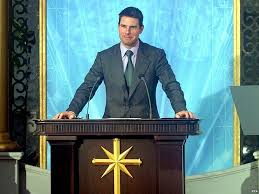
Exploring the Church of Scientology


“It’s clear from your test results that you are currently very depressed”, my assessor informed me, pointing out a yawning chasm on the graph that was meant to analyse the personality test I had taken in the London Church of Scientology.

It appeared that I was crawling along the depths of -90 which according to their matrices was a ‘completely unacceptable level’, to which I was a little puzzled given that surely anyone in such a state would scarcely be able to get out of bed. Counterbalancing this though were the high scores I had achieved on ‘active’ and ‘responsibility’, although I was surprised to see myself veering towards ‘aggressiveness’ rather than ‘inhibited’.

I could only recall there being 2 or 3 out of 200 generic personality questions touching on issues of depression (i.e. ‘do you ever feel depressed for any period of time?’, to which for pretty much everyone the answer would almost certainly be ‘yes’), so it did seem slightly contrived that I should be nosediving towards a mental breakdown. The only answer was to instantly sign up for a self-improvement course to level out my ups and downs.

My assessor, a bald man in his fifties wearing a boxy black suit and a nervous laugh, explained how he had been drawn towards Scientology as a means of escaping his doctrinaire Catholic upbringing and that he now wanted others to share in the life-enhancing possibilities that the praxis of Dianetics gave him. His sincerity I didn’t doubt, although the hard sell he had obviously been instructed to pursue became quickly uncomfortable and I was glad to leave, promising that I would return once I had “thought over whether it was for me or not”.


Situated in a grand building styled as an Italian palazzo on Queen Victoria Street, the Church of Scientology was somewhere I had been intrigued yet wary of visiting for quite some time, all too aware of the sinister claims to brainwashing and ‘cult-like’ practices that swindled credulous followers in their search for some higher truth or meaning. With the release of the controversial documentary ‘Going Clear: Scientology and the Prison of Belief’ by Alex Gibney, I decided it was time to pay a brief visit.


The first thing you notice upon entering is the quasi-medieval fibreglass ‘Scientology’ lettering in all their kitsch glory, and the cabinets of L. Ron Hubbard books. I’m always struck by the aesthetics of new religions and the evangelist Christians of America; the extent to which they unselfconsciously lack a sense of style, elegance or edge. Instead they seem to exude a feeling of the inescapably naff, in this case as though they’d been stolen from a branch of Games Workshop.

Scientology evolved in the 1950s as an extension from the sci-fi writer L. Ron Hubbard’s psychology theory of Dianetics. This focused on the premise that the brain is split into two parts: the conscious ‘analytical mind’ which is a perfect computer operating on a purely informational basis, and the ‘reactive mind’ which deals with all the emotions and trauma that become neuroses shaping and distorting our natural behaviour, and ultimately prohibiting humans from reaching their full and freest selves. Engrams are the negative stimuli that must be exposed and eradicated by an intensive process of ‘auditing’.


In the 1950s, Dianetics initially caused a sensation across America before being disparaged as pseudoscience by the professional psychologists who Hubbard despised for their elitism. Saddled with mounting debts, Hubbard decided the best way to ensure the earnings from Dianetics wouldn’t be swallowed up by tax was to create a religion which, courtesy of the First Amendment to the Constitution, would be exempt from taxation by the state. With this purpose in mind he set about constructing an astounding array of quasi-doctrines to which the committed follower would be obliged over several years and exorbitant sums of money to pass across the ‘bridge to total freedom’ and spiritual enlightenment.


To give a brief summary of the spectacular theories, it stems from the more-than-a-little stagnant and uninspiring premise that 75million years ago the world looked much as it did in 1950s America – the same cars, clothes, buildings, and so on....

Xenu, the overlord of the vast Galactic Confederacy of planets, was struggling to maintain his power due to chronic overpopulation and so conceived a plan together with some dastardly psychiatrists to paralyse and capture the souls of billions of citizens. Once this was done they were sent through space (on jet aircraft) and dropped into planet Earth’s volcanoes together with hydrogen bombs which detonated to disperse the souls into the atmosphere. These have subsequently infected each new born child with pre-stored memories and conceptions of the world and must be purged from the individual in order to be free.

As Voltaire wrote, ‘faith consists in believing what the reason does not believe, which is another miracle in itself’.

Perhaps the most instinctive response to this is to deride the whole thing as - to paraphrase Einstein - evidence of humankind’s limitless capacity for stupidity. Another way is to consider the socio-political ground on which Scientology was cultivated.


The Dianetics sensation of the 1950s rose in parallel with the new age of 'the individual', the golden age of America in which consumer confidence boomed and the space race energised the popular imagination. This heralded a social revolution in which old conventions and orthodoxies were shaken by the rise of rock n’ roll, teenage rebellion, Levis, fast food and science fiction. (Where else could the ideas of Scientology have come from but 1950s Hollywood and its out-pouring of films such as ‘Attack of 50-Foot Woman’, ‘Invasion of the Body Snatchers’ and ‘The Thing (from another world)’..?)

All of this though was haunted by a spectre of profound dread and paranoia. The apocalyptic nightmares of Hiroshima that had paradoxically brought about peace, the horrific realities of the Holocaust, the Civil Rights movement, and the unfolding Cold War with Soviet Russia that threatened ‘Mutually Assured Destruction’, all served to prepare the febrile ground for mass delusions to take shape. Is it any coincidence that the front cover of the bestselling Dianetics book was designed accordingly....?


Of course, Scientology was only one outcrop from this topography of sinister delusions. Far more high profile were, in the words of Lou Reed, 'all the dead bodies piled up in 'Nam', the Manson Family murders and the shocking Jonestown massacre.

It is perhaps entirely reasonable that people might have responded by seeking to purge from themselves the perceived traumas of their collective pasts. With 1950s McCarthyism, Americans were subjected to propaganda myths about the 'red scare' and 'reds under the bed' that could be said to have fueled the propensity towards introspection and 'psychological cleansing' that Dianetics purported to offer.


For a secular society to function on the premise - however illusory - of being free, it must celebrate the individual's ability to adopt whatever they choose as a belief system. If it provides some measure of comfort or security, or serves as a moral compass through an uncertain world, then whatever it is cannot be seen as anything other than a positive force.

Seen objectively, are the ideas of Scientology that much more far-fetched than the idea that a virgin gave birth to the son of God who was later resurrected, that the whole world was created in 7 days, that a flood deluged the earth save for an ark full of animals, that water turned to wine, that a few fish and loaves fed the starving masses, that the burning bush spoke, that the Red Sea was parted, and so on?


Indeed, in modern society we readily believe, or are encouraged to believe, many fantasies. We are told to believe in the power of the free market to steer society in directions that are natural and for the 'common good' regardless of the inherent instability or evidence to the contrary that demonstrates inequalities becoming wider and more entrenched.

We believe in the Enlightenment myth of 'progress' and our continual and sustained moral superiority as a Western civilisation.

We believe in digital technologies and their power to transform our lives into ever more profound realms of convenience and connectivity.


The crazy and (let's be honest) quite turgid sci-fi/pulp fiction ideas of Scientology are as nothing compared to the expounded theories of the Singularity currently inspiring the Silicon Valley tech community that holds very real and genuine power and influence to transform society. The new L. Ron Hubbard is Ray Kurzweil, the author of 'The Singularity is Near' and now Google's Director of Engineering where he is purportedly working on reverse-engineering a human mind.


Belief is fine so long as it harmless, and Scientology it seems is anything but. This is the overarching message of Alex Gibney’s astonishing new film ‘Going Clear’, based on Lawrence Wright’s book, that has just been released in UK cinemas after facing a barrage of intense opposition from the mobilised Scientology legal forces.

It reveals Hubbard to be a self-aggrandising bully, a troubled paranoiac and a pathological liar who fabricated his war record in the US Navy. As his quasi-religion took hold and he sailed ever further into personally troubled waters, you get the sense that he had become intoxicated by the power of his own work, inflated by continuing to be able to pull off a colossal confidence trick on the vulnerable and insecure who looked to him as some kind of new-age prophet.


(N.B. All the film’s allegations are contested by the Church of Scientology.) The film exposes the structure of the church as little more than an entrapment scheme to extort money from people lured in by the prospect of ‘self-help’ through the auditing process. The dreadful abuses carried out at the behest of the genuinely loathsome leader David Miscavige (more of a real-life Patrick Bateman than you are likely to find anywhere); the harassment inflicted upon those choosing to leave; the legal wrangling with the IRS that have enabled it to remain classified as a tax-free religion; the millions spent building up property assets (including the prime real estate I visited in London).


And then of course are the celebrity figureheads, none more prominent than Tom Cruise (nutjob extraordinaire), who is lavished by the Church like a prince whilst they continue to pay their indoctrinated staff less than a dollar an hour. A solid reason to boycott any future films starring Cruise.


It all combines to present a damning portrait of a cult at its most deranging and damaging, using rapacious religious-capitalism to maintain its strength. It demonstrates all the most insidious elements of organised religion, from which some people’s naivety and eagerness to belong to a collective are seen as faculties to be exploited for the private gain of those at the head of the table.

In a world that must have often seemed irrational and mad, perhaps the only way for some to reconcile their own sanity was to immerse themselves in a fiction that proved even more insane, and as such the continual rise of Scientology seems strangely logical.

Tuesday, 19 May 2015

Views on Tourism


First and foremost, I am a tourist. Reluctant maybe, eager to escape the bind of compulsion that shepherd the herd from one photo opportunity to the next, almost certainly; but a tourist nonetheless.

Whenever taking a photograph of some such famous site, I instinctively engineer the shot to exclude as many people as possible from the frame, obscuring the reality just the same as if the face of a photogenic building is marked by the acne of scaffolding. Instinctively I yearn to depopulate my image, isolating the subject as though in a museum, in so doing stripping it of its touristic appeal and hence rendering my own intrigue strangely artificial.

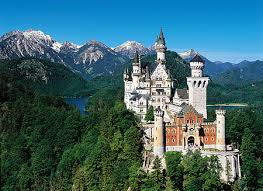
I was given cause to consider this anew on a recent short stay in Munich (incidentally my first visit to Germany). On consecutive days I made excursions out of the city to two sites that despite the differences, offer significant parallels in terms of tourist behaviour – the first was to Schloss Neuschwanstein in the Bavarian Alps (the basis of Disney’s Sleeping Beauty castle), and the second was to the Dachau concentration camp.


Firstly, there is no denying the picturesque charm of Schloss Neuschwanstein, perched as it is like a kitsch nest amidst the spectacular Bavarian foothills; indeed, considering the glorious surroundings, it would be a real architectural carbuncle that failed to wrest some measure of warm appreciation from those who behold it. Its towers and turrets seem to have been inflated like a giant bouncy castle, its multiple levels and tessellations invoke all the Grimm Brothers fairy tales that lay their foundations deep in the imagination.

The aesthetic charm loses its shine slightly when you consider that mad King Ludwig II of Bavaria, in his desire to construct his fantasy castle in the mountains, tore down the ruins of the original structure that had stood there since the Middle Ages.

In the knowledge that the castle is in fact a 19th century Romanticised simulation of authentic medievalism, it places in a new and more sceptical frame the motives of the hordes who flock here, puffing and panting up the hill-climb towards it, buying the usual gift shop paraphernalia as happily as they buy into the illusion of historicity that the castle symbolises.

To me, the castle stands as testament to blind human ambition and absurd folly. By pursuing his lunatic dream amidst financial difficulties and ill health, dying mysteriously in 1886 with the castle only a third completed, Ludwig could almost be the archetypal Werner Herzog film protagonist (played necessarily by the crazed Klaus Kinski).

It gave me cause to ponder what it is we seek when, in our own slightly mad way, we descend en masse upon places adorned with the ‘Lonely Planet’ stamp-of-approval as a genuine ‘tourist site’. Whether it’s Westminster Bridge, the Sistine Chapel, the Statue of Liberty or the Eiffel Tower, we progress in unison, pausing to take the same photographs before moving on. There is a necessary suspension of disbelief implicit in these locations and we generally revel in playing our part.


A particularly bizarre example of this that I’ve witnessed was in Brussels, where one of the prime tourist destinations (indeed the talisman of the city), is Manneken Pis, a diminutive bronze statue of a little boy pissing away into a pool below, around which crowds bustle and compete for vantage points and selfie opportunities.

It is no surprise that this production line tourism grew in ascendency along with the post-WWII consensus for rampant consumerism, fuelled by a new-found Western prosperity that allowed for jet-setting lifestyles, helping to conform to the Keynesian belief that people were working less and playing more. It is only really tolerable for most to toil away in the sedentary and prosaic routines of capitalist economies in the knowledge that for one or two weeks you are free to indulge a sense of adventure and exploration of far-flung lands.

Manifestations of the consumer mentality permeate many aspects of the tourist experience. The writer Susan Sontag in ‘On Photography’, observed that psychologically the capturing of a photographic image is a form of discreet ownership, of taming the wild (consider the terminology – ‘capture’, ‘shoot’, ‘aim’), of trying to sanitise the abstract, foreign surroundings and cultures of which we have limited experience through the solidity of the frozen image.

A recent incarnation of this is the odious phrase “I’ve done Munich” or “I’ve done London”, as though visiting these places were an action with a defined duration like a fairground ride; an ‘I [heart] XYZ’ T-shirt to be stowed away in the wardrobe of experiences. It was only when crossing the Marienbruke bridge (with its prestigious photo opportunities of the castle), that I hit upon a theory for another of these modern trends...


It has become common at tourist sites (bridges over the Seine, along canals in Venice and Amsterdam) to find padlocks affixed in great numbers, personalised with names or initials. Padlocks signify of course ownership and personal possession, and accordingly the psychological implications for the individual of this mass padlocking is the sense, however slight or imagined, that the tourist site has been consumed in some way, if only ticked off as complete on a mental bucket list.

Of course, tourism is also a destructive passion, with places such as Ankhor Wat, Machu Picchu, the Great Barrier Reef, Mount Everest and even the submerged wreck of the Titanic under increasing threat from large-scale tourist activity exacerbating their natural fragility. It is notable how, in the wake of Alex Garland’s novel ‘The Beach’, the paradisal location was reported to be under siege by people desperate to emulate the sense of escapist utopia romanticised by the book and Danny Boyle’s film adaptation.


In striking parallel to King Ludwig II, there was another figure in German history who wanted to realise the operatic splendour of Richard Wagner in a resurgent articulation of nationalism and grandiose power. This man was Adolf Hitler.

Through architecture and ceremony, Hitler wanted to create the monumentalism that would inspire the far-flung veneration of the Third Reich’s ruins in the same way as Athens or Rome. In his mind he would surely have relished the idea of the tourist hordes of the future flocking to marvel at the magisterial spectacle of the Third Reich’s legacy. Instead tourists flock to monuments of its calculated barbarity.


The museum at Dachau is excellent, full of well-written analysis charting the rise of Nazi Germany and life at the camp. A 30-minute train ride from Munich, Dachau was inaugurated in 1933 as a camp ostensibly for political opponents and dissidents, and became the prototype for all the other notorious camps that would follow across Europe. Whilst a gas chamber and crematorium were built there, mass extermination was never actually enacted (inmates were instead transported to places like Auschwitz or Bergen-Belsen), yet somewhere in the region of 32,000 died as a result of execution, medical experiments, hunger and diseases such as typhus that swept through the camp in 1945.

Walking across the expansive courtyard and along the central road of poplar trees that divided the barracks, it is impossible not to feel drugged by an immensely dull ache. By the time you are confronted with the gas chamber and ovens, feelings of despair and sorrow begin to congeal around you both physically and mentally like rigor mortis.


It is imperative for those who visit, I feel, to try and imagine your way inside the head of both an inmate and an SS guard. And yet such effort is futile, for both oppressed and oppressor were so utterly dehumanised in their separate ways that there is no basis in reality with which to comprehend such horror. Instead the mind conjures up fantastical images such as Peter Bruegel’s ‘Triumph of the Death’, or the ground ripping open for a relatively brief period of time to expose the evil manifestations of one of Dante’s circles of hell, before closing up again to leave only psychical scar tissue.

Try as you might, you cannot hear the marching jackboots on gravel, nor the cries of prisoners for absent loved ones or the fate of strangers. Instead all you hear is the breeze whipping through the trees and across the empty spaces like so many bows playing the strings of a vast cello, welling up the most mournful threnody.

And yet even here it is possible to observe varying degrees of compulsive touristic behaviour. Groups of men on an excursion from the Munich beerhalls shuffle around with hungover eyes, whilst gaggles of schoolchildren are shunted here and there by dutiful teachers. There are only so many times you can watch people posing for photographs and selfies next to the infamous wrought-iron gate ‘Arbeit Macht Frei’ (Work Sets You Free) before you have to conclude that the innate absurdity and un-selfconscious banality of some people knows precious few boundaries.


Moving away from the crowded Marienbruke at Neuschwanstein I came across a trail. As I followed this it began to zigzag up the side of a mountain, the sounds of people drowned by the sound of a nearby waterfall, and the glorious sight of a patchwork quilt of trees, textured with different tones of green. I climbed higher, spurred on by the promise of more stunning vantage points until eventually I stopped on a natural promontory of rock, the fog starting to pour down the mountain-side, and Neuschwanstein now looking like a child’s piece of Lego discarded amongst the folds and creases of a vast green duvet. It was a moment of wonder and awe, I felt like I was Caspar David Friedrich’s ‘Wanderer above the Mists’; the unexpected transcendence of a formulaic tourist experience.


In a similar vein, after returning from Dachau to the apartment I was staying in, I shared a bottle of wine with my host J, a German of the same age as myself. Despite, or perhaps because of, still feeling the depressive after-effects, I avoided mentioning my visit that day to the memorial site, but after a while and with no prompting, J raised the subject of the Nazis and the Second World War.

My impression was that the subject would be far too taboo and sensitive to broach with any German, let alone one from Munich (the birthplace of National Socialism), and so I was amazed at the candid honesty that J displayed. He described the continued underlying sense of shame and guilt that persists to this day amongst Germans of all ages, and the increasing desire to address the topic openly – as evidenced by the fabulous Museum of National Socialism on the site of the original Nazi ‘Brown House’ on the Konigsplatz.


This introspective analysis of the motives and impulses that lead to the Holocaust, on a personal and national level after so many years of silence and repression seemed to me most inspiring and gave me cause to consider the ways in which Britain and America continue to live in the glow of the Second World War as the moral victors triumphing over an unconscionable evil.

No discourse or analysis in mainstream British culture over the WW2 progresses, it seems to me, much beyond the patriotic Churchillian narrative of good defeating evil, with scant reflection on the level of anti-Semitism existing in Britain prior to the war or dreadful atrocities such as the firebombing of Dresden that were perpetrated by the Allied forces.

I was elevated psychologically by the unexpected nature of the conversation just as I had been elevated physically by the wonders that had largely eluded me from the tourist assembly line at Neuschwanstein. For all the calculated consumerism of so much touristic experiences, it is the serendipity of random events that undoubtedly makes travelling one of the most enlightening and rewarding experiences that life has to offer.

Friday, 24 April 2015

Views on the General Election


“Send them back to where they came from”, was Nigel Farage’s characteristically obtuse answer to the question of what to do about the obscene numbers of migrants (1,600 so far this year) drowning in the Mediterranean in a desperate effort at bridging the gulf between lands fraught and stable.  And yet the EU leaders, having convened on the crisis have, it seems, scarcely anything of more constructive worth to add.

As they flee from a region the West had a direct hand in destabilising, we are now hamstrung by the deficit of public and political will, with immigration already so volatile an issue, to provide a meaningful and effective response.  But the plight of these migrants, as well as our national response, is both illustrative of the waves of animosity swelling across Europe and in South Africa, and a stark prophesy of what the near future might hold.

As major environmental catastrophes become ever more frequent in occurrence and devastating in impact, desperate migrants seeking the safety of securer shores will quite clearly face an increasingly hostile and defensive reception.  As today so with the impacts of climate change, less developed nations will suffer the consequences first and receive scant amelioration from the nations with the most responsibility for generating them.

Perhaps typically, UKIP surpass the other main parties with bizarre thinking that borders on the territory of climate denial, such as manifesto pledges to scrap the Department of Energy and Climate Change as well as green subsidies.  This can surely only mean that burying our heads in nationalism and pints of ale whilst doing nothing would result in even more uncontrollable numbers of refugees looking to seek asylum in Britain once the inevitable deluge in their homelands starts to manifest itself in environmental destruction.

Of course, UKIP’s once solid momentum is now a fast-melting ice floe, and it is the two main parties who must address these issues much more meaningfully.  Alas they have abjectly failed to do so during this election campaign.  From promoting his government prior to election as looking to be ‘the greenest ever’, Cameron now says next to nothing about environmental issues, and neither does Miliband.

Despite their differing political stances, both are firmly committed to programmes that do nothing to safeguard against climate change and instead pursue the precise means of exacerbating the problems through relying on the markets to foster ‘growth’ and ‘sustainability’.  The marketisation of public life and financial system are chronically short-termist by nature, looking for quick investments and fast rates of return that then engender a climate of low risk and a deficit of innovation on the part of businesses who play it safe by sticking to tried-and-tested formulas.  This short-term business mindset, instilled over decades, is entirely at odds with the need to cut carbon emissions and dam the river flowing towards environmental disaster.   

As Naomi Klein has written in ‘This Changes Everything’, the debate should no longer be steeped in the tired and failed dogmatism of left and right wing that younger generations feel negligible kinship or identity with, but should instead be focused on ensuring the future stability of human life on earth.  The earth, when all is said and done, will be fine, and in my darker days I often postulate that perhaps the human race would be wiser to leave the stage sooner rather than later and let the planet carry on the show without us glorying in the limelight.

I am sceptical that the human race, having brought this threat upon ourselves, can alter its behaviour radically enough to solve it.  That said, ignoring the issue only plays into the hands of the rich and powerful elites.  These are the people who for decades have profited from environmental destruction in the name of entrepreneurial endeavour, economic efficiency and profit margins, and who plan on continuing in such a vein unless they are stopped.  (Last year I attended the World Petroleum Congress in Moscow and witnessed first-hand the phenomenal spectacle of the industry examining its own muscles in front of the mirror like an oiled-up bodybuilder.  It was clear to me at least that these organisations have far too much to lose and will not concede defeat without an almighty battle.)

This is why the Green Party will be getting my support in the May General Election.  A party that seeks to involve more women at a higher level, vehemently opposes the Transatlantic Trade and Investment Partnership (TTIP), seeks to redress the chronic imbalance that has opened up between rich and poor in this country, and one that adopts the principle that the professionally enclosed economic system with their elaborate models and statistical instruments should no longer be the sole marker for denoting a country’s well-being.

I’m convinced that far from being a wasted vote, this is a rebuke to the main parties, giving them cause in the future to take environmental issues more seriously instead of remaining mired in short-termism, adhering to the principles of ‘disaster capitalism’ (as we saw in the kneejerk reaction to the flooding crisis last year that was promptly forgotten about), and pandering to the UKIP vote that aims to crystallise an instinctual resentment against migrants that will only take on more pernicious shades as natural events transpire.

Sunday, 22 February 2015

Views on Parliament


Each morning I get up and eat toast off of the white-and-gold embossed side plate that, after enough complimentary wine from a work event at the House of Commons terrace bar, I smuggled from the building.

Being reminded of this daft micro-rebellion always jolts my thoughts to the silliness of the Houses of Parliament as an institution and how my own childish act stands in some way symbolic, for me at least, of the way the prolonged existence of the place keeps us all ensorcelled by a state of retrogressive juvenilia.

By no means is this limited to its outward-facing influence, for it seems that Parliament acts as a fermenting crucible of immaturity and pomposity, a petri dish of rank egotism, an abattoir of political careers that, to paraphrase Enoch Powell, can only ever end with a bolt-gun to the head. Just consider the blustery rigmarole that defines the place, the archaic traditions that keep it mummified in a sarcophagus like the long-dead kings of Ancient Egypt.

Consider the ‘ceremonial’ role of the Remembrancer that dates back to 1571, who serves as a channel of communications between the City of London Corporation and Parliament. (In the words of journalist George Monbiot this is ‘an official lobbyist who sits behind the Speaker’s chair and ensures that, whatever our elected representatives might think, the City’s rights and privileges are protected.’)


One need only watch Michael Cockerell’s BBC documentary series ‘Inside the Commons’ to be inflated to bursting point with the outraged conviction that the place should be burnt to the ground, its inhabitants chased into the Thames like vermin and the whole thing built again to redefined plans. Whether it’s the cloakroom holders for swords, the whiskery Clerk of the Commons taking the odd pinch of snuff (taxpayer-funded snuff no doubt!), or reports of the Tory backbench ‘bully boys’ trying to sabotage the camera crew; the whole charade positively reeks of unedifying bullshit, ill-befitting a 21st century state trying to maintain a serious holding in the world.

Now I may be cynical, but not to the extent that I don’t believe a sizeable proportion of those who become elected to the Commons are compelled to do so out of a certain degree of altruism, with some principles that guide them, however broken the compass might be. However, it would seem that as soon as one enters the Palace as an elected MP it is all but impossible, regardless of ideology or conviction, to resist becoming enfugged by the heady smoke of ceremony and tradition; the asbestos dust of history slowly settling on your lungs to leave you hacking up the same conceited mooing we all recognise and despise.

One can imagine Osborne, Cameron et al treating the place like an extension of their billiard room; whilst the left (or what remains of it) is little better. Dennis ‘Beast of Bolsover’ Skinner, one of the few remaining in the Commons who might purport to be a socialist, is wheeled out like a museum piece to lob some safely predictable javelin of ire on Queen’s Speech Day.


The notion that cartoon characters like (above) Michael Fabricant (looking like a Boris Johnson clone-gone-horribly-wrong), or (below) Jacob Rees-Mogg (who in Cockerell’s documentary is seen trying to filibuster a private member’s bill on affordable housing by droning out poetry), or Baroness Anne Jenkin (who presides over the allocation of the House of Lord’s £260,000 champagne budget whilst deriding those relying on food banks) are deemed fit to represent the majority seems like a colossal condemnation both of them and, since it said that you get the politics you deserve, of us as well.


It would though be rather churlish to dwell on the personal since politicians of all stripe have affected a bland, indistinct, almost androgynous persona; characterized chiefly by their paddling around in the shallow waters of character, background and ideology. Any feasibly attempt at satire can only be absorbed into the black hole of self-parody that has been cleverly constructed around themselves. It seems to be almost the case that the public are kept emollient by a colossal confidence trick and a collective feeling of ‘how long can we get away with this?’, given that for all the populace might gripe and moan they never quite have the collective imagination or wherewithal to un-tether the guy-ropes and bring the whole canvas crashing down.

Indeed I believe that ever since the early-90s (the triumph of economic globalisation over political ideology), politics has been undergoing a discreet, largely unconscious yet to perhaps telepathic, neuterization process, whereby it seeks to become as drained of any interest or intrigue as possible. In short, politics has sought to become ever more boring.

The reason being that only by diverting attention away, by lulling us into a sense of sheer apathetic disengagement, can the whole charade be sustained, whilst they may decry the falling turnouts or the plunging membership numbers; really their undisturbed existence is prolonged by the solidifying fact that for more and more people, politics and the establishment process means less and less.


This has been a necessary illusion to manufacture given that over the last 2 or 3 decades, as the efficacy of the markets became the leading Western faith, and ever more tracts of power were surrendered to the financial institutions of the City, the EU and the private sector, Parliament became increasingly desiccated to the point at which now it is a mere prosthesis of democracy.

It is little more than a decomposing husk, a ruin in statis, symbolic of the parlous level of representation and hegemonic influence that presides there, like an echo chamber of transparent phantoms wearing rictus grins and coloured ties. It is now little different from Battersea Power Station just a little way downriver, once a bastion of hydraulic power, generating the executive energy that would symbolise the direction and compulsion of our lives, now hollowed out by finance capital, corrupted by foreign investment to become little more than a simulation of itself, a mausoleum of ideas.


Politicians have been calibrated to their new forms by the rampant ethos of the political economy and consumerism as has society-at-large. Accordingly, they are now economic units, subject to the endless replication of the same limited brand identities, the mundane monopolies, an assembly line production defined by its efficiency and homogenisation rather than individual worth or distinction. Politicians, like electronic gadgets, the seasons of fashion or new cars, are programmed with an almost planned obsolescence for ever-faster consumption - ever-decreasing tenures, diminishing influence, easily discarded once their use-value has been expended.

There is an increasing spectre of global concerns that can be said to be largely divorced from the political arena; whilst posturing efforts may be made to convince us of the contrary, deep down we all know that politics - in the traditional form that Parliament as an institution so symbolises - is ever more hollow and toothless.

The future viability of the NHS, climate change, the oil markets, the financial sector, technological development and cyber terrorism; these are all issues that define the 'post-political era'. (Even the sturdy legs of military influence have been irreparably hobbled post-Iraq.)


Instead, politics has to occupy itself and us with the staple concerns with which it is most comfortable; the same class-based domestic affairs, thriving off of the traditional prejudices and discontents through the steadily more oblique and meaningless parameters of left and right. Only in a post-political landscape, where parody is a stock-in-trade and predictable stigmas are stoked and enflamed, could a party like UKIP gain such traction.


Instead of Parliament, we need some kind of system whereby regional assemblies with genuine local power can be established by and for the community they deem to serve. The Palace of Westminster should be replaced by a gigantic translucent structure, a '2001'-esque monolith upon which day and night could be projected various economic models such as the Gini Coefficient or FTSE 100 Price Index, or perhaps even just scrolling Twitter feeds.


Affection for the building itself should be considered in view of what it is - a monument to political spin. For, belying its golden brown turrets, spires and vanes, it was designed in the 19th century by Charles Barry and Augustus Pugin as part of a conservative 'Gothic Revival' to instil in the minds of the masses a sense of heritage and gravitas that could thus justify and exude executive power, and that would be reenforced with the artificial anchor-weights of history into place.

And so we must do the only thing we can do to become a truly sophisticated and civilized nation led by those 'of the people, for the people', and that is to tear it down and start anew, if only one side plate at a time...

Sunday, 30 November 2014

Views on Charity


It is an unremarkable November day, and a Facebook badge addresses me personally assuring me that ‘with my help’ we can fight back against the ebola virus. Other posts ‘celebrate’ the flourishing of follicles upon otherwise bald upper lips as part of ‘Movember’. In the mailbox are festive appeals from Barnardo's and the British Red Cross. On the walk to work I pass by smiling bucket-shakers for Children in Need and sellers of Royal British Legion poppies. Passing through a tube station I spot posters demanding that I ‘text FIGHT’ to join in the battle against cancer. In the news is a report of the latest resurrection of the Band Aid single.

This, I would venture to suggest, is but the tip of the leviathan iceberg that manifests itself in the waters of contemporary society. I use the term 'leviathan' intentionally, for it was the philosopher Thomas Hobbes who held the view, to which I find myself subscribing, that charity exists to lighten the burden of compassion of the wealthy man.


It is my contention that our current relationship with charity is indicative of more general socio-political developments; that it many instances it runs counter to our notion of a dignified, innovative, rational culture; and that, contrary to conventional wisdom, it could actually be a flawed and inefficient approach to tackling worthy causes.

I am fully aware of the polemical nature of such views, given that in the 21st century secular west, offering counter arguments to the charitable consensus is one of the last remaining taboos; standing firm amidst the rubble of past controversies to have been demolished by the liberal wrecking ball. Today, anyone who might dare speak against the overwhelming tide of 'good nature' encapsulated by charitable endeavours is branded a heretic, an obstinate contrarian, selfish for their own wants and thoughtless for those of the less fortunate. Put simply, to criticise is just bad social 'form'.

Given the saturating scale and nature of charity exposure, the pressure to think and act in unerringly positive approval, not to mention the scorn exerted by the faithful on the dissenting few, is evidence, in my view, of a form of benevolent totalitarianism (or if you want a terrible neologism, 'charitarianism'.)

According to government statistics, the 2013 annual income of the sector was £59.9bn. This is a huge 43% increase since 1999 when it was a mere £23bn, and what other area of the economy could boast such growth?!. The existance and expansion or a burgeoning charity sector works to build up an irrational submission to covert forms of authority, bombarding the ordinary man/woman with impulsions to act and not think too deeply about the substance or worth of those actions. In effect, it works to marginalise and coerce the ordinary man/woman into an apathy in which they meekly invest in necessary illusions.


One primary illusion is Rousseau's view that, '...it is contrary to natural right that a handful of men be glutted with superfluities while the starving multitude lacks necessities'. In principle of course, Rousseau is absolutely right, and it is this consensus that charity justifiably aims to derive gain from; however, it ignores the fact that society is structurally at odds with such a moral principle. Take the classical problem of homelessness and destitution...

Homelessness is an aberration in a wealthy nation, nonetheless it is one that is tacitly permitted to exist. This is because at a subliminal level the homeless serve to instil in us the sense that 'there but for the grace of god go I'. In a society predicated on order, obedience and everyone 'doing their bit', they are perhaps the most potent visual reminder of what awaits should you fail to fully comply and slip through the cracks in society's paving stones.


At a fundamental level, capitalism demands the existence of an underclass of poverty in order that people will accept wages set just high enough to avoid suffering the same fate, but with just enough insecurity to enshrine subservience. If the liminal reality of the homeless person's plight is disturbing and regrettable (which it surely is), the spectacle is most definitely an intrinsic and necessary tenet of a competitive and dynamic society. Not so much, as Albert Camus' protagonist in 'The Fall' describes as 'the oppression that the oppressed inflict on decent people', but as a deep psychological balm of reassurance that their continual obedience is justified. A homeless person slumped in a doorway is, on an imagistic level, the most powerful propaganda weapon in the benevolent state's arsenal.

Another critical illusion is the axiom that your charitable contributions make a tangible difference. This is not to denigrate or undermine the many good intentions of the individual who may well be altruistic in their actions. But it is an interesting social phenomenon to identify, that as, over the last 2 or 3 decades, people have become evermore discontented with political elites - membership falling, election turnout falling, ideology stagnating, apathy rising - the charity sector has grown exponentially.

I believe that as people have felt they have less influence over or stake in society they have had to alleviate a residual sense of alienation, hopelessness and insignificance through charitable means. In a 'polyarchy' (a system of elite decision-making and public ratification), people's democratic vote is essentially as meaningless as throwing change into a collection bucket or sponsoring someone to run a race.


Of course, it is a truism that whilst an individual's donation may be pointless, collectively it can make a difference. But here is where I think our approach to charity has become distorted by the adoption of neoliberal capitalism since Thatcher. No one in their sound mind would argue that we shouldn't provide funding for cancer treatments, or veterans of combat, or disabled children, or elderly care homes. So what does it say about a political establishment that has turned these and countless other worthy causes over to the public, relieving themselves of the burden of providing for them?

Governments, to all intents and purposes, have devolved their social responsibility to the charity sector and empower them to effectively tax people on the basis of their good will. Instead, governments use their tax revenues to fund the development of Trident and other nuclear weapons, aircraft carriers with no aircraft, illegal wars and subsidies to big business (namely, all the unpopular things that they know the public wouldn't donate money for).


In lockstep with the privatisation of industry, the state's abdication of its social responsibilities has left the charity sector to develop in a system solely defined by commercial imperatives and the dictates of the free market. Organisations of all stripe and agenda have become 'registered charities' to relieve them of the pressures of operating entirely through the drive for profit. In order for a company to subsist on the basis that isn't solely commercial, with shareholders demanding appeasement, their only option it seems is to apply for charitable status. So what does this mean for the sector?

What it means is that charity has been manipulated and encouraged to adapt itself to the laissez faire capitalist system of the economy as a whole. According to government statistics, of the £60bn annual revenue in 2013, £53bn went to charities with an income of £500,000 or more. This works out as 6% of the sector receiving 90% of the capital. Since it goes against most moral principles to make a value judgement on worthy causes, these figures demonstrate that the system in which the sector has been left to grow like ivy is flawed.

In this capitalist realm, charity has been forced to become commercialised, to the extent that ethical causes are offered as consumable goods to be plucked from the shelf and displayed with a pious sense of pride. In such a competitive market charities have to invest more and more labour hours, focus and money coming up with innovative new marketing strategies or advertising opportunities, or just thinking up gimmicks, as with the 'ice bucket challenge' earlier this year (what was it supposed to be raising awareness of? I guarantee the majority will have forgotten already...)


They have begun to be exposed for dubiously unethical decisions and practices; for instance, Comic Relief allowing funds to be invested in arms manufacturers and tobacco firms), and more recently, Save the Children deciding to honour Tony Blair with a major award.

The expansion of the charity sector runs in parallel with the shrinking of the state as it has surrendered evermore power and influence to the whims of the market. As it has done so, tax has become so lambasted that even the suggestion of a tax increase policy is considered electoral suicide. Instead, successive governments seek to proudly proclaim that they have slashed tax burdens for the public. As they have sought to drag down tax thresholds, all the while promoting the idea of a cohesive and inclusive society (Blair's 'Third Way', Cameron's 'Big Society', Miliband's 'Together'), they have encouraged and relied upon the charity sector to fill the void and collect all that additional tax revenue to allocate to worthy causes that government deems unworthy of investing in.


So how could we approach charity in a more sensible, honest and dignified way? The obvious thing would be for government to mandate on the basis that the public deems such causes to be worthy, and therefore to allocate funding accordingly. If as a society we agree that cancer treatment should be invested in, and support provided for war veterans, then that investment should be made instead of their respective charities having to rely on the varied good will of the population. How would this extra government funding be paid for though?

In this regard, we could do well to look to Islam. As one of the Five Pillars of Islamic law, zakat is the giving of 2.5% of one's savings to the poor and needy as part of tax. Therefore, everyone pays towards these causes based on accumulated wealth. Of course, should people wish to voluntarily allocate more of their income to causes personal to them they should be able and encouraged to do so; in Islam this is known as sadaqah.


Although not without its flaws in terms of management and allocation, in 2012 Islamic financial analysts estimated annual zakat spending at more than $200bn per year, far more than global humanitarian aid contributions. This was also borne out by polling into comparative individual contributions across British society in which Muslims came out ahead of Jewish, Protestants, Catholics and atheists by a considerable margin.

The Economist has mooted the policy idea of removing or reducing the state pension from those on higher rates of income, thereby relieving the pension burden and helping to reduce the nation's debt, 'for the top-fifth of pensioner households, who have an average private income of £65,000, the state pension pays for holidays and golf-club fees'.


Naturally, this would be an unpopular policy for those affected, but perhaps they should be encouraged to forego their pension by selecting a charity to support instead. Equally, there should be more emphasis placed on flexible working, with people incentivised into taking on voluntary roles or doing charitable work with tax credits. The more charity work you do (actually doing something rather than sitting in an office thinking up the next 'ice bucket challenge'), the more tax credits you would be entitled to.

Although making a public disclosure or spectacle of personal charity-giving is undignified, I don't doubt that many will have read this essay thinking 'just how much do you do for charity then?' The answer, regretfully, is not very much, although I hope this will change in the future. Each month I probably spend anywhere between £15 - 30 on second-hand books at the fabulously well-stocked Oxfam shop on Marylebone High Street. I'm confident that this gesture is negligible compared with many people, but I'm equally confident that it is probably a lot more than many others.


But really, it isn't the act of giving itself I take issue with at all, but instead the current 'spectacle' that the charity sector has been obliged to develop in order to compete in a free market economy. I feel that if we want to live in a civilised, compassionate and reasoned society, we could do far better in terms of how we incorporate charity into our lives without so much of the piety, commercialisation and lack of dignity together with an awareness of the intrinsic illusions that embody the benevolent totalitarianism of modern charity.